Weather is one of the most decisive forces in olive growing. It influences everything from fruit size and flavour to the final polyphenol levels in extra virgin olive oil. For producers like Morocco Gold, whose single‑estate oil is prized for purity and naturally high antioxidants, the climate of the growing region is not just a backdrop — it is a defining ingredient.
Below is a clear, structured look at how weather affects olive and olive oil quality, with specific reference to the unique environmental conditions of Morocco Gold’s groves.
How Does Weather Affect Olive Oil Quality?
Weather can influence olive development, ripening, oil yield, flavour and the composition of the resulting olive oil. Temperature, rainfall, sunlight and water availability throughout the growing season can all affect the fruit, although olive variety, harvest timing and production methods also play an important part in the final quality of an extra virgin olive oil.
Why Weather Matters for Olive Quality
Olives are extremely sensitive to climate. Temperature, rainfall, sunlight, and seasonal timing all directly influence the chemistry of the fruit — and therefore the quality of the oil.
The main weather factors that shape olive quality are;
- Temperature: Extreme heat or cold can stress the trees, reduce fruit formation, or damage the olives. Moderate heat encourages polyphenol development.
- Rainfall: Water availability can influence fruit development, oil yield and composition. Periods of water stress can also affect polyphenol levels, although the outcome depends on factors including olive variety and the stage of fruit development.
- Sunlight: High sunlight exposure boosts antioxidant formation and enhances the peppery, fruity flavour profile.
- Seasonal timing: A cool spring, warm summer, and dry autumn typically produce olives with high polyphenol levels and strong flavour.
The Climate of Morocco Gold’s Groves: Why It Produces Exceptional Olives
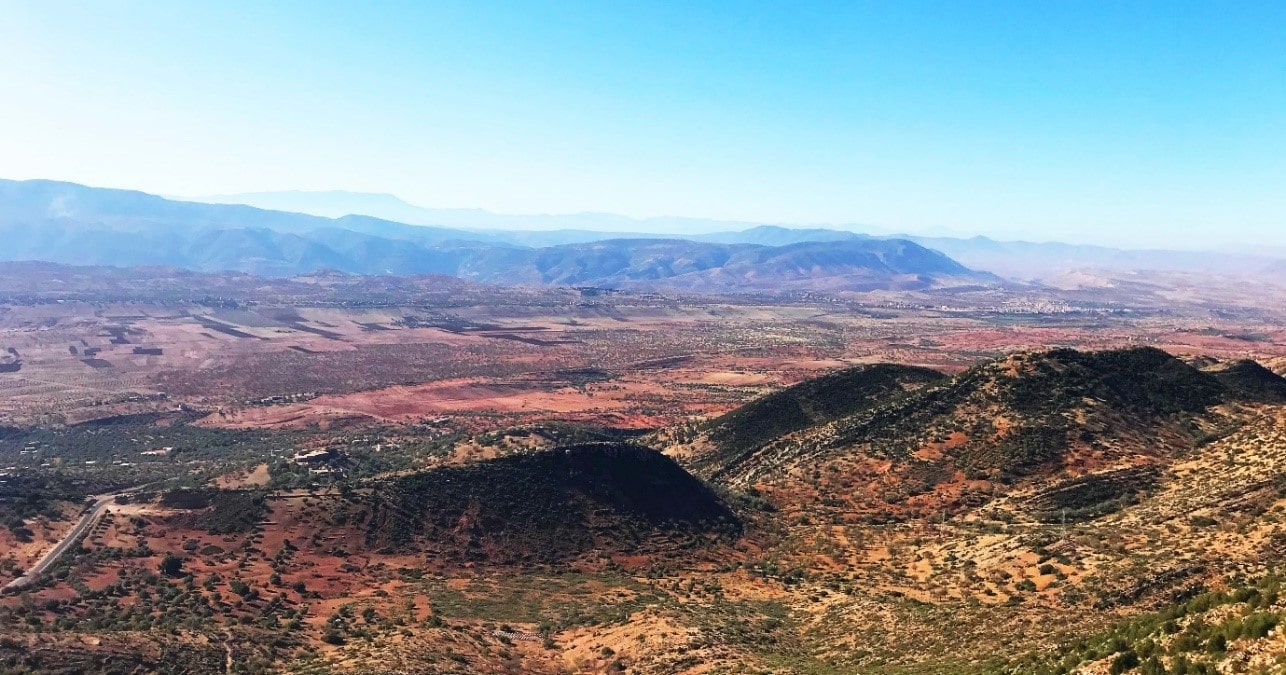
Morocco Gold olives are grown in the fertile foothills of the Atlas Mountains, an environment that naturally supports premium olive production. Several climatic features make this region ideal:
1. Long, hot summers
The region enjoys consistent sunshine and dry heat, which encourages the olive fruit to develop concentrated flavours and naturally high antioxidant levels. Heat stress — in controlled, natural amounts — is known to increase polyphenol production.
2. Low rainfall during ripening
Morocco Gold’s groves benefit from minimal rainfall in late summer and early autumn, preventing dilution of the fruit and protecting the olives from fungal diseases. Dry conditions also help maintain the purity of the oil.
3. Cool mountain nights
The Atlas foothills experience significant diurnal temperature variation. Warm days and cool nights slow the ripening process, allowing polyphenols to accumulate while preserving freshness and green fruitiness.
4. Mineral‑rich soils
The combination of mountain runoff and ancient soils contributes to the distinctive flavour notes Morocco Gold is known for — green fruit, almond, fresh herbs, and a gentle peppery finish.
How Weather Influences Polyphenol Levels In Olive Oil
Polyphenols are the natural antioxidants that give extra virgin olive oil its health benefits and peppery kick. Weather plays a huge role in determining how many polyphenols the olives produce.
Weather conditions that increase polyphenols
- Early‑season heat
- Dry summers
- Cool nights
- Mild water stress
Weather conditions that reduce polyphenols
- Excessive rain
- Humid conditions
- Over‑ripe fruit
- Prolonged high temperatures without cooling periods
Weather isn’t the only influence on polyphenol levels. Olive variety, harvest timing and the way the fruit is handled and processed also play important roles.
Morocco Gold’s 2026 Harvest: Polyphenol Levels and Weather Impact
This year’s harvest benefited from a particularly dry, warm summer and cooler‑than‑average nights, creating ideal conditions for polyphenol development.
Morocco Gold’s latest harvest has a polyphenol level of 606mg/kg, alongside an acidity level of 0.19%, the lowest acidity level Morocco Gold has achieved to date. These levels are well above the typical range for many commercial oils and reflect the environmental advantages of the Atlas foothills.
Higher polyphenols mean:
- A more pronounced peppery finish
- Greater stability and longer shelf life
- Enhanced health benefits
- A richer, greener flavour profile
Weather + Production: Why Morocco Gold’s Process Preserves Quality
Even perfect olives can lose quality if the production process is slow or poorly controlled. Morocco Gold’s “from grove to bottle” method is designed to protect the weather‑created advantages of the fruit.
Key steps that preserve weather‑driven quality
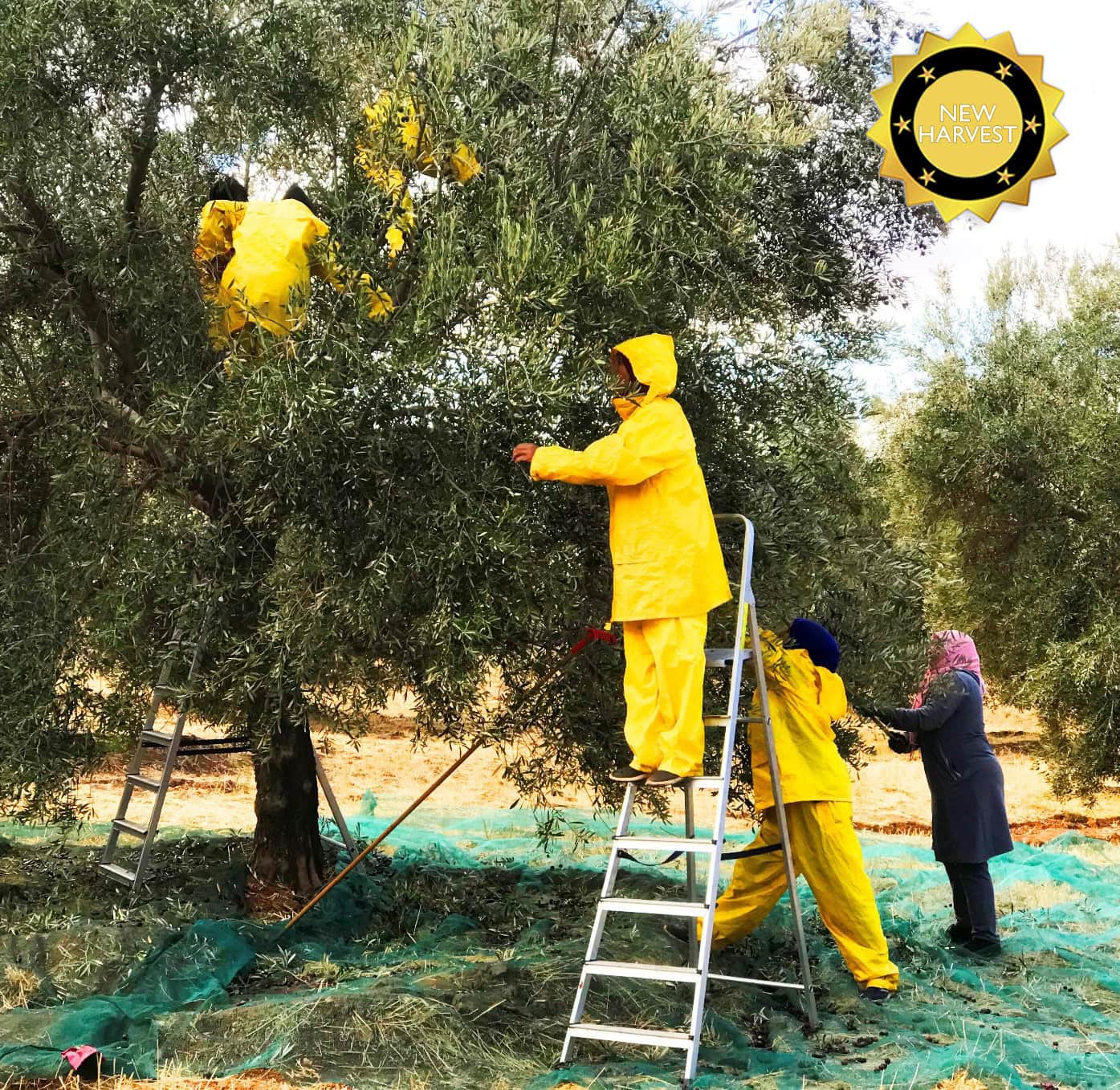
- Hand‑picking early in the season to lock in polyphenols
- Processing within 24 hours to prevent oxidation
- Cold extraction below 28°C to protect delicate antioxidants
- Two‑phase centrifugal extraction for purity
- Nitrogen‑flushed bottling to prevent degradation
The result is an oil that reflects both the climate and the craftsmanship behind it.
Weather shapes olives long before they reach the mill. In the Atlas foothills, the combination of hot days, cool nights, low rainfall, and mineral‑rich soils creates olives with exceptional flavour and naturally high polyphenols. Morocco Gold’s careful production process ensures that the benefits of this unique climate are preserved in every bottle.