If you’ve ever tasted a quality extra virgin olive oil and noticed a peppery kick at the back of your throat. But fear not, in the case of premium olive oil like Morocco Gold, it is a sign of quality.
That distinctive peppery sensation – sometimes accompanied by a pleasant bitterness – signals a high-quality extra virgin olive oil. It can be an indication that the oil contains naturally occurring polyphenols, the powerful plant compounds that contribute to both its flavour and its potential health benefits.
Key Points At A Glance
- A bitter or peppery taste can be a characteristic of fresh, high-quality extra virgin olive oil.
- The peppery sensation is associated with naturally occurring phenolic compounds, particularly oleocanthal.
- Early-harvest green olives tend to produce oils with greater bitterness and pungency.
- Taste alone cannot tell you the exact polyphenol content of an olive oil.
- Morocco Gold’s latest New Harvest contains 606mg/kg of polyphenols and has an acidity level of 0.19%.
So, why does extra virgin olive oil taste peppery?
The peppery sensation in high-quality extra virgin olive oil is largely associated with these phenolic compounds which occur natural within the olive fruit.
One of the compounds particularly associated with the characteristic peppery or throat-stinging sensation is oleocanthal. When you taste an oil rich in these compounds, you may experience a gentle tickle, warmth or peppery sensation at the back of your throat. The intensity can vary considerably depending on the olive variety, growing conditions and when the olives were harvested.
At Morocco Gold, our latest new harvest has an acidity level of 0.19% – which is the lowest we have ever achieved and our polyphenol level is 606mg/kg – again – well above the health benefits level of 250mg/kg.
A fresh, premium oil may begin with fruity or grassy flavours on the palate before developing bitterness and a peppery finish. The pepperiness isn’t necessarily a sign that the oil is too strong. In many cases, it is a clue that the oil contains valuable naturally occurring phenolic compounds.
Why Is Premium Extra Virgin Olive Oil Bitter?
Bitterness is another characteristic that can be found in high-quality extra virgin olive oil, particularly oils made from young, green olives.
As olives mature, their composition changes. When harvested early, while they are still green, they tend to contain higher levels of naturally occurring polyphenols. These compounds can give the resulting oil a more complex flavour profile, including a pleasant bitterness.
A high-quality extra virgin olive oil might therefore taste:
- Fruity, from the fresh characteristics of the olivehttps://morocco-gold.com/the-difference-between-new-harvest-and-early-harvest-olive-oil/
- Green or grassy, particularly when made from early-harvest olives
- Bitter, thanks in part to naturally occurring phenolic compounds
- Peppery or pungent, creating that familiar sensation at the back of the throat
The balance between these characteristics is important. A premium extra virgin olive oil shouldn’t simply taste harsh or overwhelmingly bitter. Instead, the bitterness and pepperiness should complement the oil’s fruitiness and freshness, creating a complex and enjoyable flavour.
What Olive Oil Flavours Can Tell You
| Characteristic | What It Can Indicate |
|---|---|
| Fruity | Fresh olive fruit characteristics |
| Grassy / Green | Green olives and early harvesting |
| Bitter | Naturally occurring phenolic compounds |
| Peppery / Pungent | Phenolic compounds including oleocanthal |
| Balanced Finish | Fruitiness, bitterness and pungency working together |
Why Morocco Gold Tastes Peppery.
The distinctive flavour of Morocco Gold Extra Virgin Olive Oil begins with the olives themselves.
Morocco Gold is made exclusively from the Picholine Marocaine olive, a variety known for its naturally high polyphenol content. The olives are grown in a raised valley in the foothills of Morocco’s Atlas Mountains, at an altitude of around 2,000 feet. The region’s particular climate and terroir are important factors in the characteristics of the fruit, while the local soil is naturally rich in phenols.
But the production process is equally important.
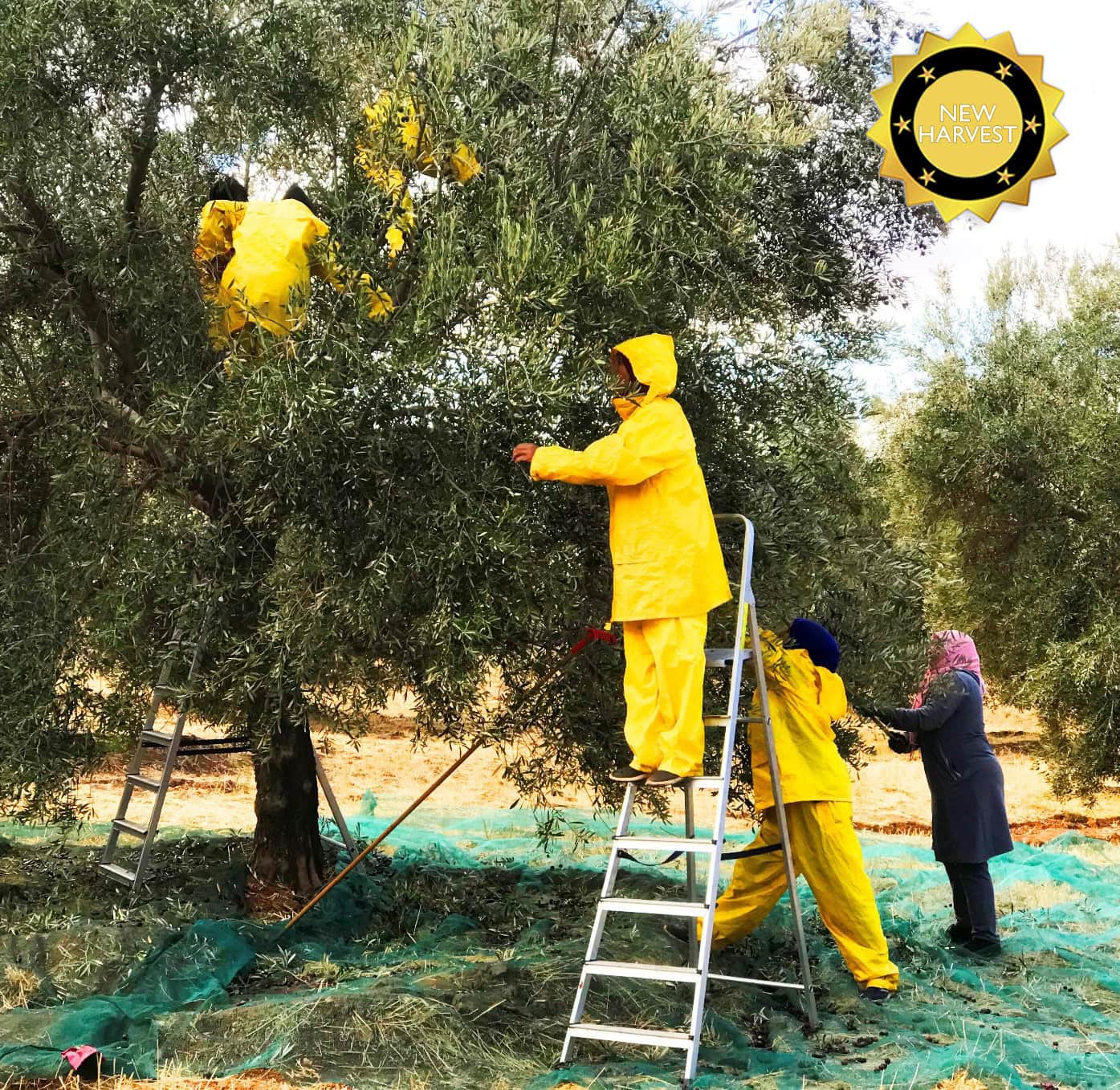
- Olives are hand‑picked early while still young and green, prioritising high polyphenol levels over higher oil yield.
- Early harvesting preserves the oil’s natural polyphenols, which shape its flavour and character.
- Olives are processed within 24 hours to maintain freshness and quality.
- Extraction is cold‑pressed below 28°C, helping retain flavour and polyphenol content.
- Production involves crushing and a two‑phase centrifugal separation.
- The resulting oil has green fruitiness, sweet almond notes, fresh turf and herbs, and a gentle peppery finish.
- The peppery sensation is a deliberate result of the olive variety, growing conditions, early harvest, and careful extraction.
Does Pepperiness Mean Healthier Olive Oil?
There is an important connection between the taste of extra virgin olive oil and its polyphenol content.
Polyphenols are naturally occurring compounds with antioxidant properties, and some phenolic compounds in extra virgin olive oil are associated with recognised health benefits. In particular, the European Food Safety Authority has approved a health claim relating to olive oil polyphenols and protection of blood lipids from oxidative stress, provided the oil meets the required polyphenol level.
This is why the peppery sensation can be so interesting. While you cannot determine the exact polyphenol content of an olive oil simply by tasting it, a pronounced peppery or pungent character can be associated with the presence of certain phenolic compounds.
So, when a good extra virgin olive oil gives you that little peppery tickle in your throat, you don’t necessarily need to reach for the water.
You might just be tasting the natural character of a fresh, polyphenol-rich oil.
A little bitterness can be a good thing.
A Quick Olive Oil Quality Taste Test
The next time you taste your olive oil…
Make this summer golden. Enjoy 20% off Morocco Gold and taste the difference quality makes.
- Try taking a small sip of your extra virgin olive oil and let it move around your mouth.
- Notice the first flavours. Is it fruity? Fresh? Grassy? Can you detect almond or herbs?
- Then wait for the finish.
- If you notice a gentle bitterness followed by a peppery sensation at the back of your throat, that may be one of the most interesting parts of the tasting experience. It is a reminder that extra virgin olive oil is a fresh agricultural product, shaped by the olive variety, the soil, the climate, the harvest timing and the way the fruit is handled after picking.
So, is good olive oil supposed to be peppery and bitter?
In a well-made extra virgin olive oil, those flavours are part of what makes the oil complex, distinctive and delicious – and may also point towards the naturally occurring polyphenols that make premium extra virgin olive oil such a fascinating addition to a healthy diet.